PhD Supervision Guides for PIs and Students
Supervision is the biggest single factor in how a PhD feels. These guides cover the meeting rhythm, feedback, written expectations and the paperwork around them.
9 articles
PhD Synopsis Format: Structure, Sample and Free Template
PhD synopsis format explained: the two kinds of synopsis, the sections to include, typical page limits, a fictional sample, a free Word template and a submission checklist.
PhD Progress Report: Format, Sample and Free Template
How to write a PhD progress report: the sections to include, how often to submit it, a filled-in sample, a free Word template and what to say when progress is slow.
PhD Supervision Meeting Agenda: 1:1 Template and Questions
A 1:1 agenda for PhD supervision meetings, questions for your first meeting with a supervisor, a notes template, and how supervisors make meetings count.
Lab Expectations Document: What to Include (Template)
What a lab expectations document covers, a copyable template for PIs, real examples from published lab manuals, and how students and lab managers use it.
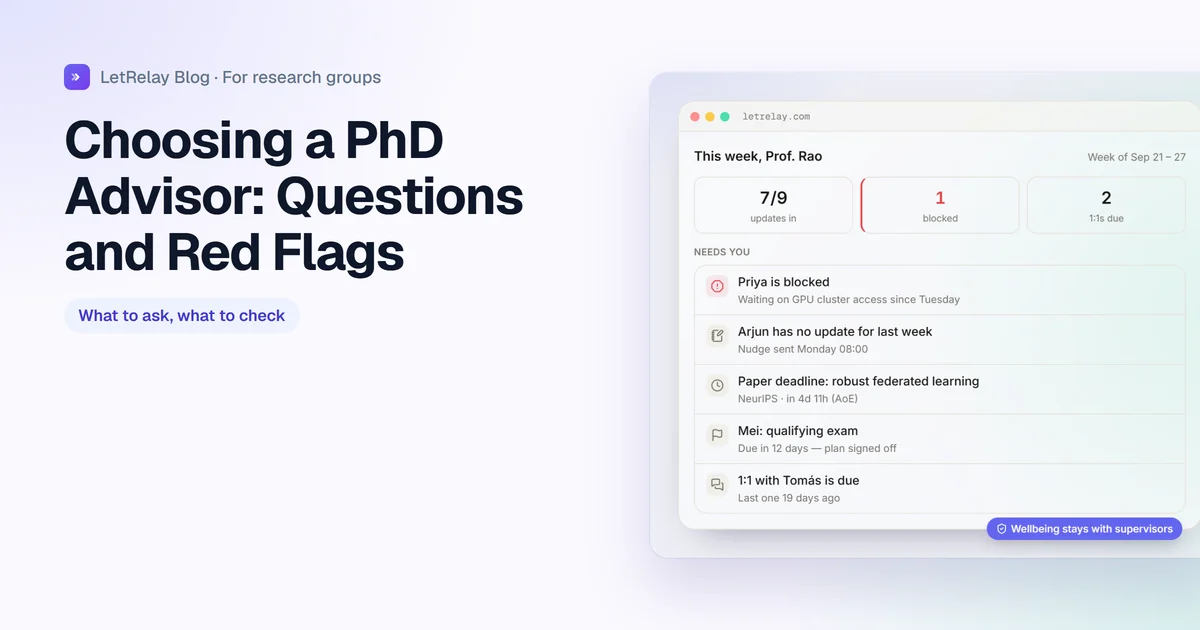
Choosing a PhD Advisor: Questions to Ask and Red Flags
The questions to ask a potential PhD advisor and their students, the red flags that matter, what the data says about supervision, and how to change advisor.
How to Write a Recommendation Letter for a Graduate Student
A paragraph-by-paragraph structure, an example letter, the phrases that quietly weaken a letter, and a workflow for PIs writing dozens each season.
How to Email a Potential PhD Supervisor (With Examples)
When emailing a professor helps your PhD application and when it does not, what to write, two example emails, and how PIs can handle inquiries fairly.
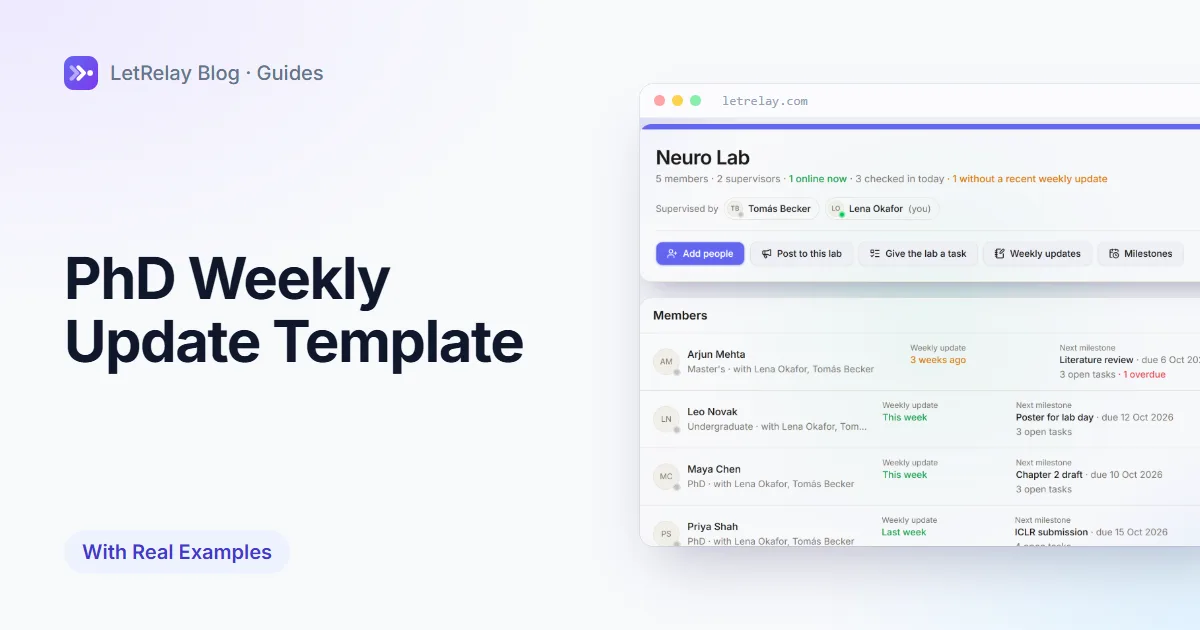
PhD Weekly Update Template (With Real Examples)
A weekly update a PhD student can write in three minutes and a supervisor can read in thirty seconds. The template, good and bad examples, versions for each stage of the degree, and how supervisors should answer.
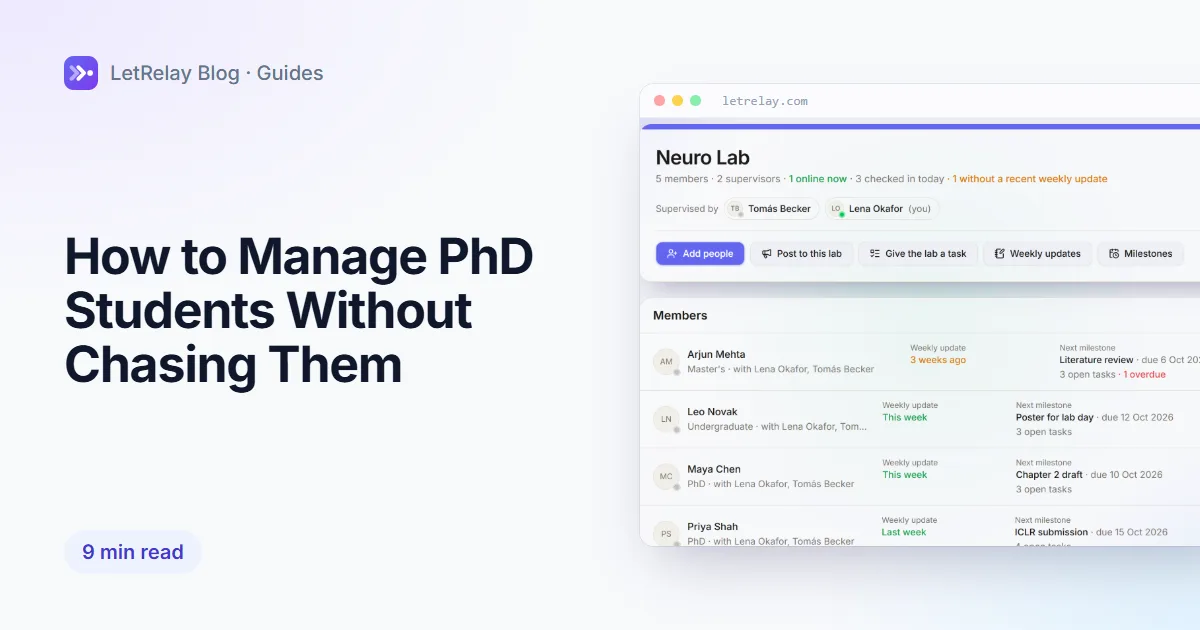
How to Manage PhD Students Without Chasing Them
A weekly rhythm that tells a PI where every student stands — three-minute Friday updates, a Monday digest with blockers first, 1:1 notes that turn into tasks, and milestone reminders — without anyone chasing anyone.